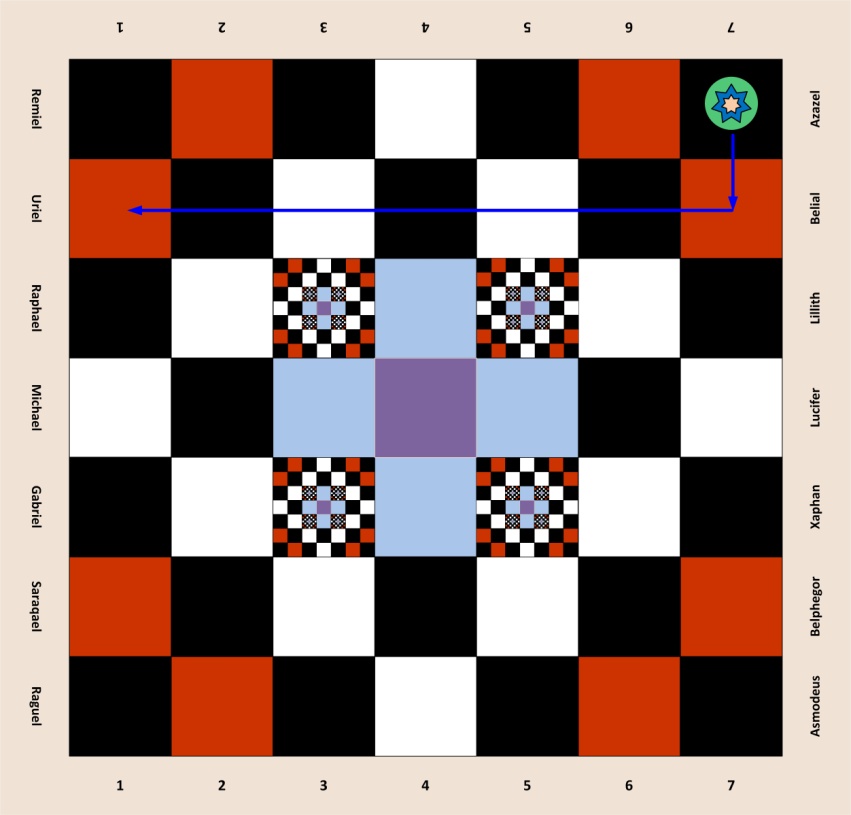
Moving a piece 7 squares away per turn
-
Upon each turn, a player rolls the dice and then moves one piece. Each subsequent turn is of the opposite player.
-
The piece that the player chooses to move must be moved 7 squares away. The movement is always in two parts:
-
Horizontal movement (1st part) followed by vertical movement (2nd part), or
-
Vertical movement (1st part) followed by horizontal movement (2nd part).
-
-
In the first part, the horizontal/vertical movement is across the number of squares specified by the relevant dice (see 3 dice).
-
In the second part, the vertical/horizontal movement is after a 90-degree turn and across the remaining number of squares totaling 7.
For example:
-
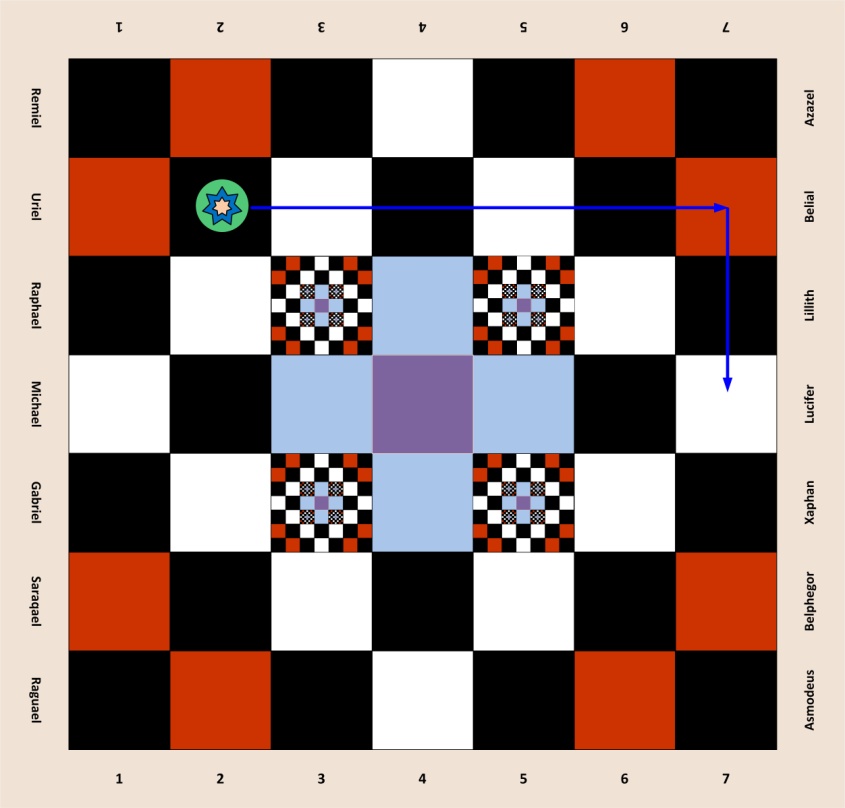
If the dice roll result is 5, a piece located on Uriel 2 can be moved 5 squares horizontally to Uriel 7 and then be diverted 2 squares vertically to Michael 7. In total, the piece moved 7 squares away, diverting its direction 90 degrees after 5 squares, and then moving 2 squares.
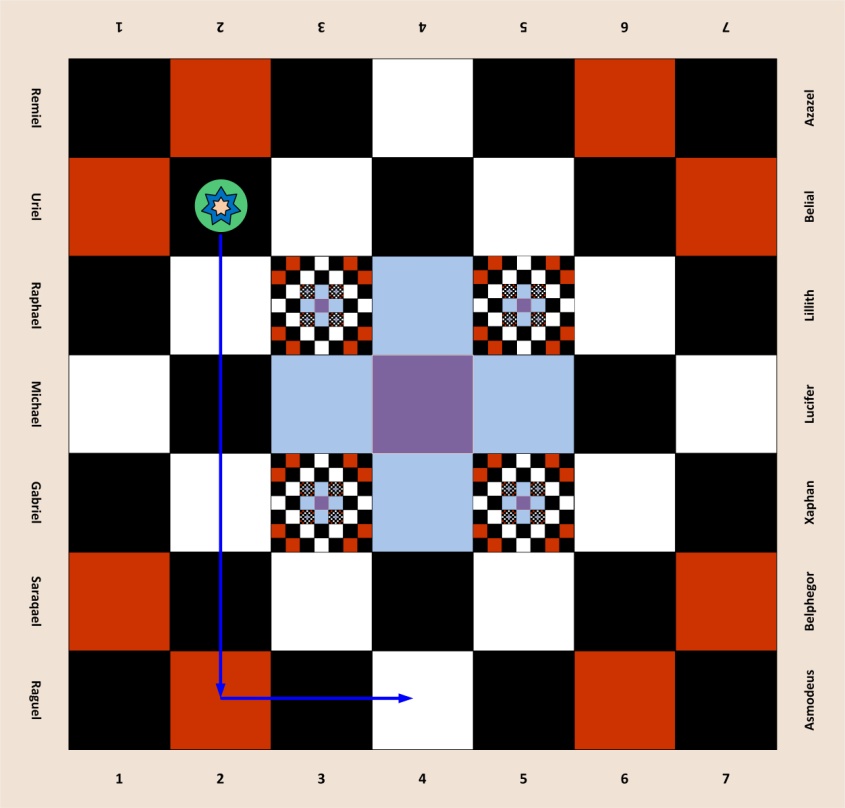
Alternatively, the piece located on Uriel 2 can be moved 5 squares vertically to Raguel 2, and then be diverted 2 squares horizontally to Raguel 4.
-
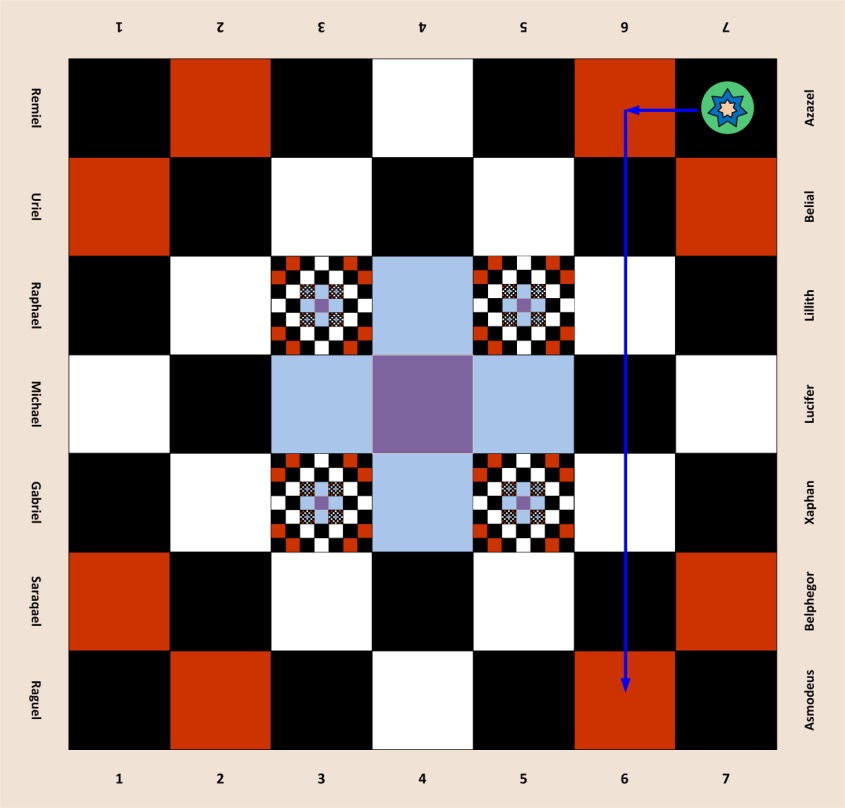
If the dice roll result is 1, a piece located on Remiel 7 can be moved 1 square horizontally to Remiel 6 and then be diverted 6 squares vertically to Raguel 6. In total, the piece moved 7 squares away and diverted its direction after 1 square.
Alternatively, the piece located on Remiel 7 can be moved 1 square vertically to Uriel 7 and then be diverted 6 squares horizontally to Uriel 1.